
Snowshoeing in the Dolomites: A Different Way to Experience Winter
When most people think of the Dolomites in winter, they think of skiing. Fast lifts,
groomed runs, après scenes, and the pressure to “keep up”.
But this trip reminded me that there’s another way to experience the mountains —
one that’s quieter, slower, and even more immersive.
Snowshoeing in the Dolomites turned out to be one of the most grounding, beautiful
winter experiences I’ve had.
Arrival in Val Gardena: Setting the Scene
We arrived in Ortisei, in Val Gardena, tucked into a valley framed by dramatic peaks
and layered with history. One of the things I loved immediately was the cultural blend
— Italian, Austrian, and Latin influences all coexisting, with signage in multiple
languages and food that reflects that mix.
Ortisei itself feels lively but not overwhelming. After a full travel day, it was the perfect
base to ease into the mountains before heading out on snow the following morning.
Day One on Snow: Wide Open Landscapes at Alpe di Siusi
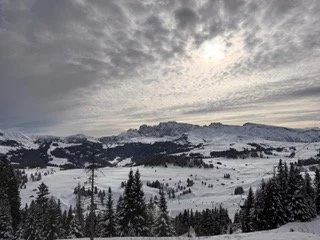
Our first full day took us up to Alpe di Siusi, the largest high-altitude alpine plateau in
Europe. The scale of it is hard to describe — wide, open expanses with uninterrupted
views of the Dolomites in every direction.
The landscape felt expansive and exposed, with icier snow and big skies that made the
mountains feel almost endless. Moving through it on snowshoes — rather than flying
past on skis — gave a real sense of place and scale.
Partway through the day, we stopped for an outdoor lunch, bundled up in the cold and
eating schnitzel that somehow tasted even better after our time on the snow.
Simple, unfussy, and incredibly satisfying.
We were accompanied by a local UIAGM/IFMGA mountain guide, which made a huge
difference — not just for safety, but for context. From geology to local knowledge,
having someone who truly understands how the mountains behave in winter added
depth to the experience.
Day Two: Powder, Valleys, and the Magic Moment
The second snowshoe day was the one that really captured me.
That morning, avalanche risk was elevated. Given the conditions, we adjusted our
route, moving from Passo Gardena down toward Colfosco and staying within safer
valley terrain.
As we set out along the new route and reached the next area selected by our guide,
we could hear avalanches releasing in the distance—a sobering reminder of how
dynamic and unpredictable the mountains can be in winter.
It was a clear example of why experienced local guides matter so much: reading
conditions in real time, adapting the plan thoughtfully, and making conservative
decisions without taking away from the experience.
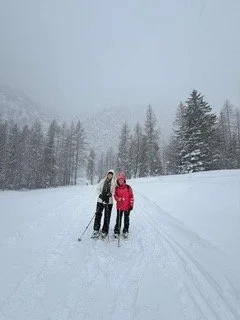
The snow was fresh, soft, and quiet — that kind of silence that only exists after
snowfall. Moving through the valleys at a slower pace, with safety front of mind, made
the day feel both peaceful and deeply immersive.
At one point, we paused simply to take it all in — surrounded by mountains, moving
slowly, with no pressure to rush or perform. Those unforced moments tend to stay
with you the longest.
Food, Culture, and the Small Details
One of the unexpected highlights of the trip was the food. Think mountain refuges,
hearty meals, and warm dishes that feel earned after time outside in the cold. There’s
something deeply satisfying about eating well after being active in winter conditions.
Beyond the snowshoeing itself, we also had the opportunity to site several hotels in
the area, offering valuable insight into what’s possible for clients looking for alpine
stays that balance comfort, character, and location.
One of the properties that made a lasting impression was Ciasa Salares, where we
stayed for the latter part of the trip. Its intimate setting and distinct characteradded
a layer of warmth that made the experience feel especially special.
Why Snowshoeing Works (Even If You’re Not “Outdoorsy”)
What I loved most about this experience is how inclusive it felt.
You don’t need to ski.
You don’t need extreme fitness.
You don’t need to love adrenaline.
Snowshoeing allows you to:
Move at a natural pace
Actually see the landscape
Hear the quiet
Stop when you want
Feel genuinely connected to your surroundings
It’s ideal for travellers who want winter scenery without the intensity of downhill
sports — couples, friends, or anyone looking for something active but less intense
than skiing.
Final Thoughts
The Dolomites are spectacular no matter how you experience them — but
snowshoeing offers a way in that feels intentional, grounding, and deeply
memorable. If skiing has never felt like your way into the mountains, this might be.